The Legend of the Golden Dawn
They say the desert remembers everything.
It remembers those who built cities that no longer exist.
It remembers caravans that vanished inside sandstorms.
It remembers the names of those who tried to tame it –
and those who understood: you cannot conquer the desert,
you can only make a pact with it.
But long before the first human walked across the dunes,
before a camel left its first footprint,
the desert knew other beings.
They were called the Wardens of Shadowed Futures.
They didn’t fly like birds.
They didn’t breathe fire like in the cheap tales told to children.
They were spirits of the wind – the ones who could shift the direction of the sand,
bend the paths of storms,
and… subtly nudge the lines of fate.
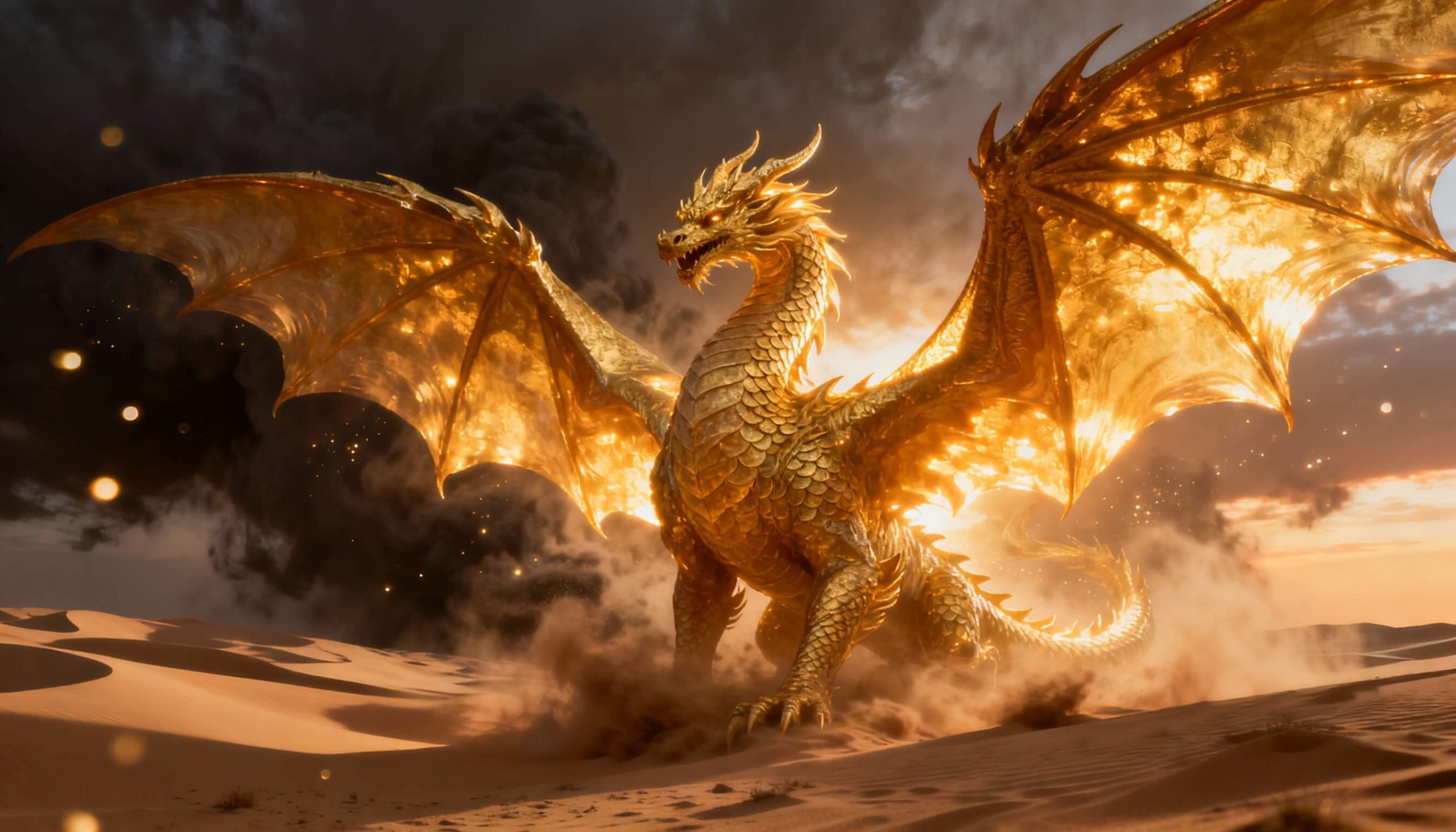
The Wardens Before Men
When the world was quieter and the night deeper,
the sand at night rose above the horizon,
turning into something like an ocean frozen in motion.
In this wordless stillness,
the dragons of the wind were born.
They didn’t need bodies.
They didn’t need eyes to see.
They read tension in the air,
felt the fear and hopes of generations yet to be,
and listened carefully
to what did not yet exist.
For them, the future was not “later”,
but simply another layer of wind.
They did not know humans –
but already knew that humans would come.
And that, one day, the sand would have to be shared.
Their task was simple and impossibly difficult:
to make sure that one force did not destroy another
before anything even had a chance to begin.
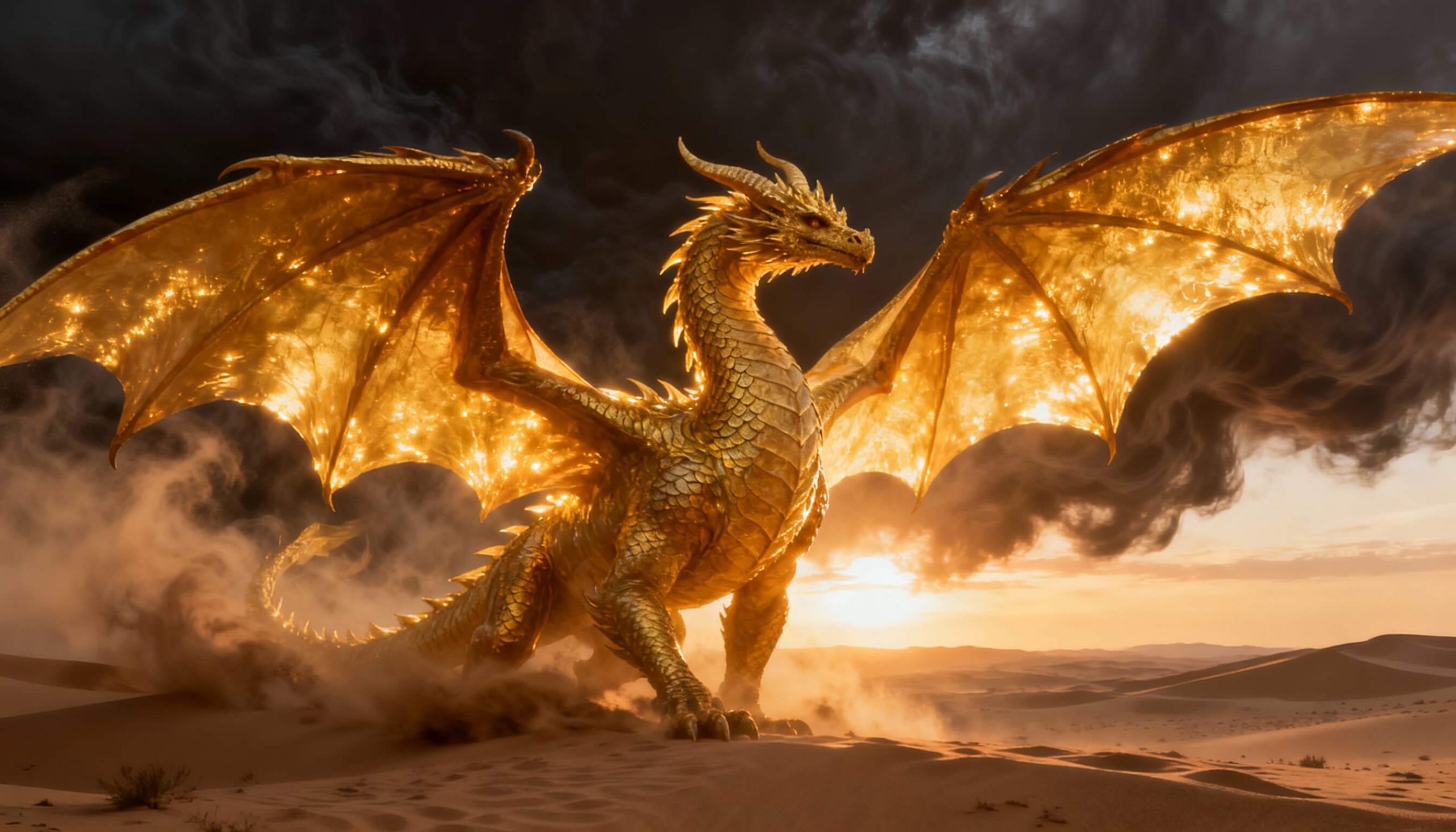
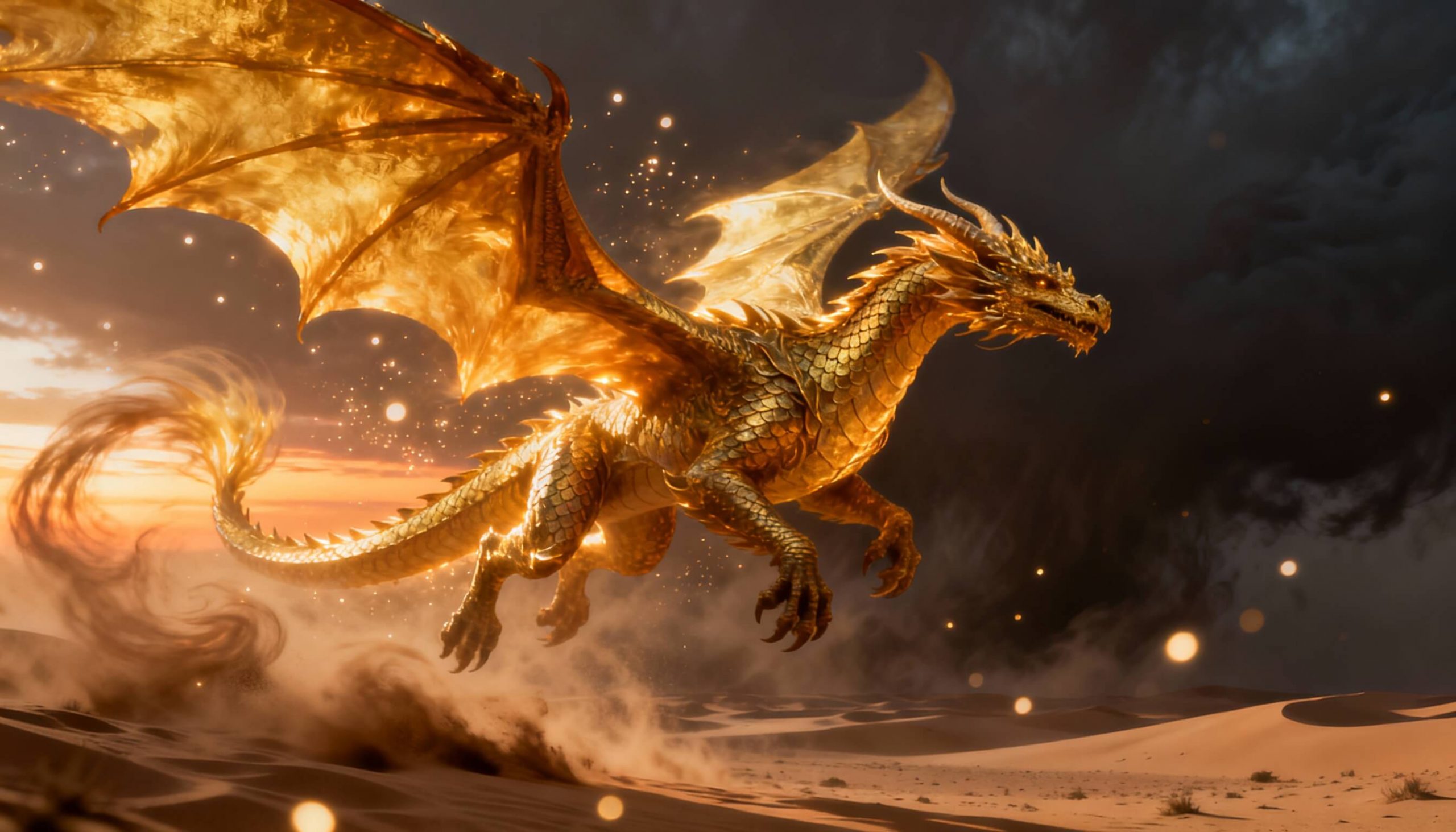
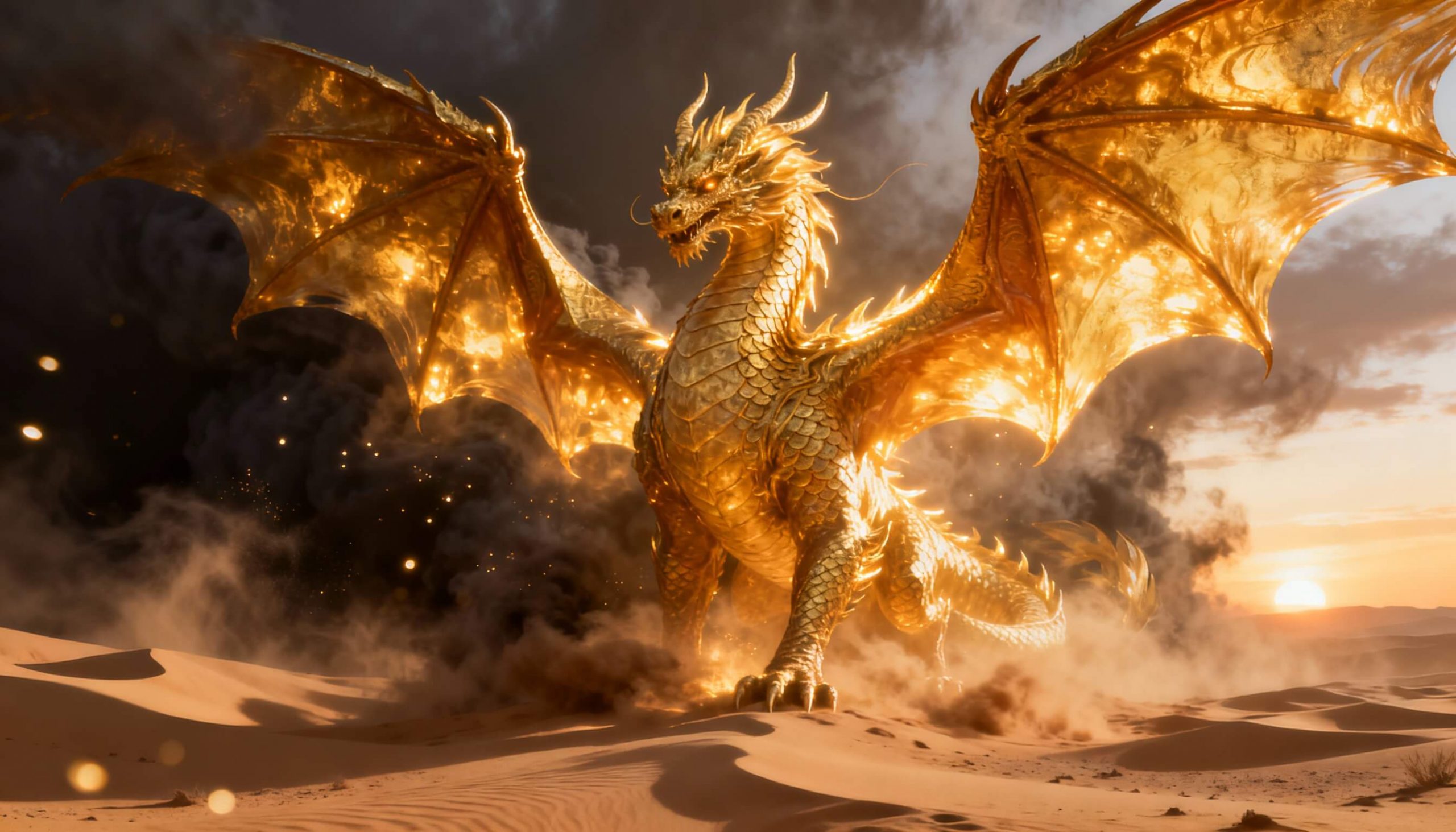
The Golden Dragon of Dawn
Among all the Wardens there was one
whom even the other dragons spoke of in a hushed voice.
They called him the Golden Dragon of Dawn.
He was not born from sand like the others.
He did not rise from the dark like the winds of night.
He appeared at the very moment
when, one day, the first ray of sun
tore through the night sky too early.
Where there should still have been darkness,
a thin golden trace suddenly flared –
and from that trace a being emerged
that belonged neither to night nor to day.
He was woven from first light.
A dragon created not by an element,
but by a question:
what comes next?
The other dragons watched the balance.
He had a different role.
His mission was not to fight,
but to protect what had not yet had time to grow.
Not armies.
Not cities.
Not empires.
He was the Warden of something
people usually forget:
the future.
The Lines of Fate
When humans at last entered the desert,
when the first caravans carefully stepped into the sea of dunes,
the Golden Dragon was already there.
People saw sand.
They saw the sun.
They saw heat, mirages, death on the horizon.
He saw something else.
He saw lines.
Thin threads stretching out
from every child born on that sandy land.
Those threads reached far beyond their bodies,
far beyond their homes,
far beyond their time –
and vanished in places where there was still nothing at all.
Each child was a knot of the future.
Each of their smiles – a small tremor in the world.
Each of their breaths – a tiny shift in a greater pattern.
Where the threads shone bright,
the world kept moving forward.
Where they started to darken,
shadows gathered – the kind from which
wars, betrayals, and silent disappearances are born.
The Golden Dragon didn’t look at people.
He looked through them – into their tomorrows.
And whenever he saw
a child’s line snapping too early,
whenever the future began to break
before it even took form –
he intervened.
Quietly.
Without thunder, without omens, without spectacle.
But he intervened.
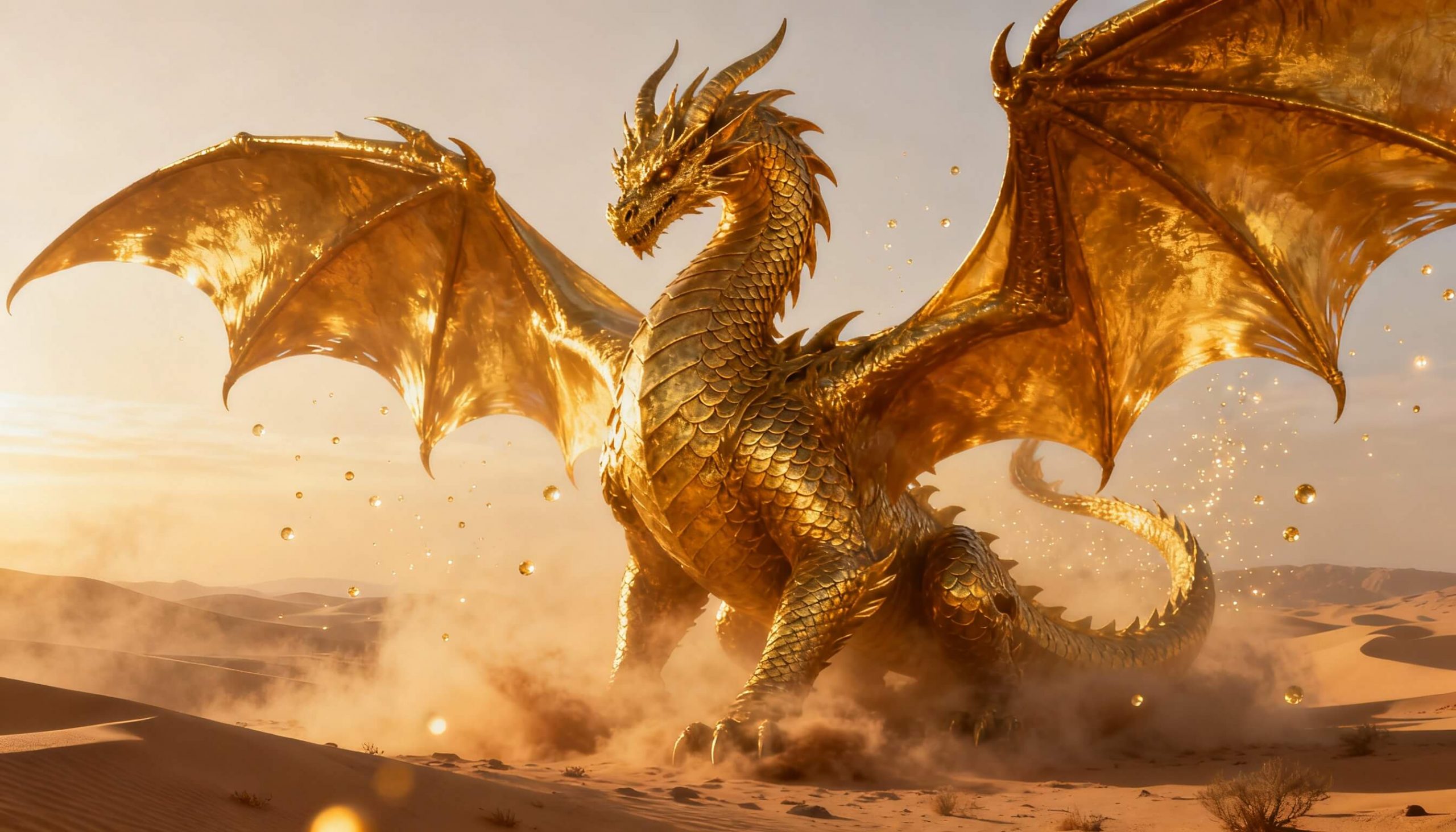
Sparks of the Future
Legends travelled among the caravans.
Stories of pregnant women
who somehow made it through the worst storms,
when everyone had said: “they will never survive this.”
Stories of families leaving ruined cities for “nowhere” –
and still, somehow,
finding a new oasis no one had ever seen.
Stories of old caravan leaders,
carrying infants in their arms,
who survived storms, tents collapsing,
and the death of half the caravan –
and still,
mysteriously,
remained alive.
Stories of lone wanderers
who crossed the desert with a tiny basket,
wrapping a baby in their last cloak –
and still,
against all odds,
found their way back to people.
The elders explained it simply:
“There are things the desert refuses to take.
What you carry in your hands can be lost.
What you carry in the future – cannot.”
The Golden Dragon saw such people as little flames
that could not be allowed to go out.
He did not guard their bodies.
He guarded their impact on the world,
which was meant to unfold many years later.
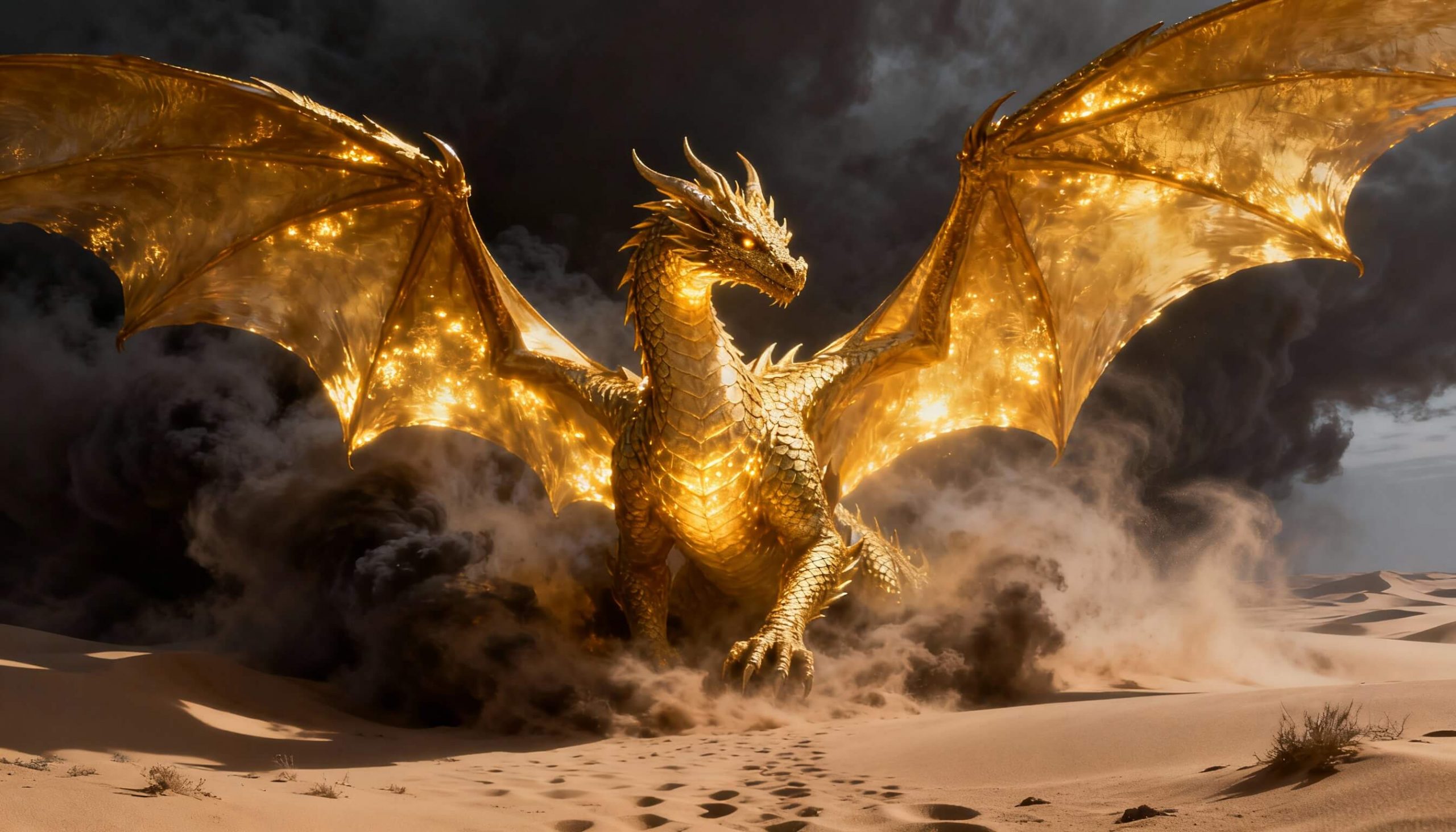
Once in a Generation
It was believed that
the Golden Dragon of Dawn
appeared only once in a generation.
Not because he didn’t exist at other times.
But because humans didn’t know how to notice him.
The desert said:
the dragon is where the air smells of future.
He came:
when a child was born
and old women would say:
“This one has the eyes of those
who don’t yet know that fear is even an option.”
when, in a family destroyed by the storm,
a single infant survived –
and no one could explain why this child.
when, in cities on the edge of collapse,
children were born who would later change entire lands.
Every time the world needed someone
who could turn history toward the light,
the Dragon appeared –
not for that child as they were,
but for who that child would become.
When He Came
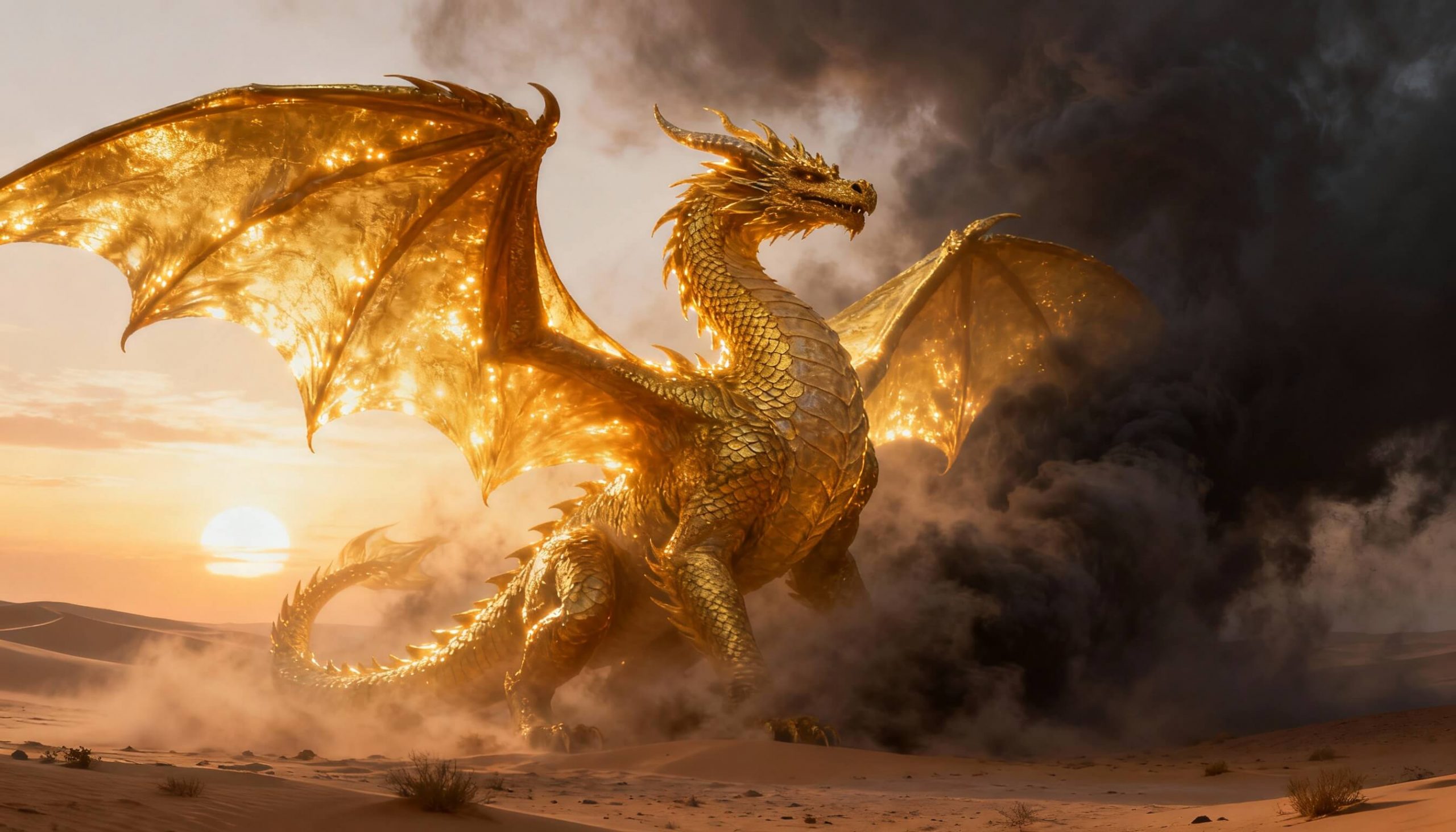
He never burst into the world with thunder and skyfire.
No heavens torn apart by lightning.
No meteors.
He chose moments
when a human feels:
“this is the end.”
A brutal storm,
where sand swallows a scream
faster than it leaves the throat.
A great silence,
when the desert freezes –
and even the wind is afraid to move.
A night in which a caravan loses its way
and walks in circles.
A small tent where a child is burning with fever,
and the mother holds its hand
the way you hold someone you are about to let go.
A village at the end of the world,
where water has gone,
people gather the last of what’s left
and decide:
either leave all together,
or stay and die one by one.
In such moments,
the air changed.
Someone felt
a warm, steady warmth in their chest.
Someone saw
a golden glimmer on a dune
long after the sun had set.
Someone noticed
a shadow falling the wrong way.
Someone heard
sand moving against the wind.
And sometimes,
inside a tent where a child slept,
it suddenly became very, very quiet –
and only the mothers heard
the rustle of wings,
even though outside
there was neither wind nor movement.
These signs were called
“the Breath of Dawn.”
The Thing You Don’t Speak of Aloud
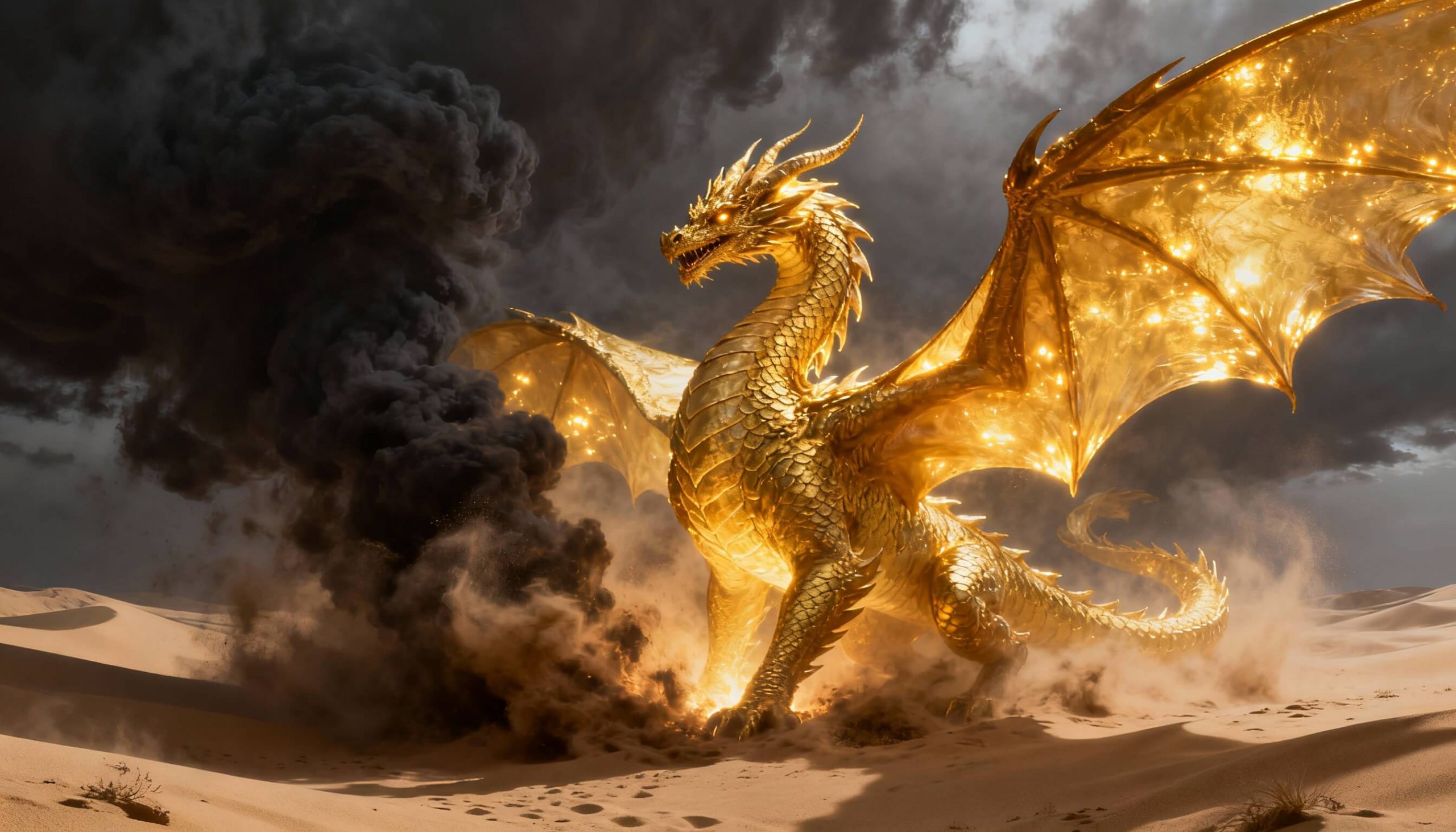
People didn’t speak of the Golden Dragon openly.
Not because they were afraid.
But because the desert doesn’t forgive noise around sacred things.
Old folk passed their stories
as if between the lines:
“Some things only come
if you don’t shout about them.
Some forces don’t hear words –
they hear the way you hold a child’s hand.”
It was believed:
if someone speaks too loudly of a miracle,
the miracle turns its back.
So they talked about the Dragon like this:
— Don’t be afraid.
— The sand knows whom it will still let through.
— The future sometimes answers too.
The future loves a quiet voice.
Loud words belong to those
who want power.
The Dragon was heard by those
who wanted only one thing:
for their child to wake up in the morning.
The Time He Vanished
But there was a time
the caravans preferred not to mention.
A time
when the world began to grow tired of the future.
People stopped believing
that children were something more
than an extension of themselves.
They cared less about who a child might become,
and more about what the child was “supposed to bring.”
More work.
More hands.
More profit.
More heirs – not for the world,
but for their property.
Voices appeared saying:
“Children are a risk.”
“Children are a weakness.”
“Children get in the way of living the way you want.”
And the more often such words were spoken,
the darker the lines of fate became.
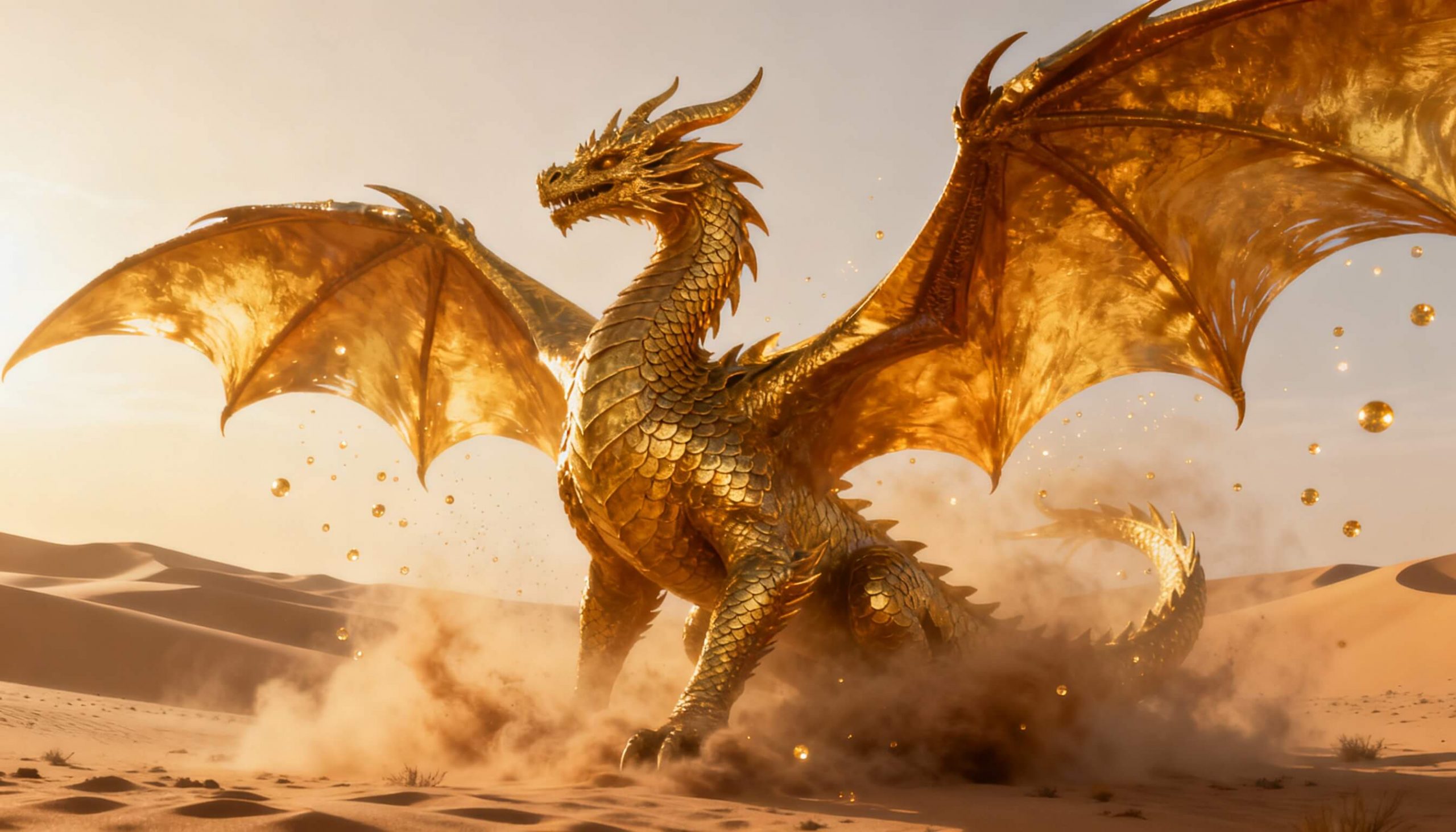
The Golden Dragon did not leave out of whim.
He felt he was no longer heard.
When, for the world, unborn futures
turned into mere statistics,
when people thought more about short pleasures
than long roads,
when caravans walked only for profit,
not for new light –
he went deep into the sand.
And the desert changed.
The Desert Without Its Warden
Storms became more frequent.
The wind grew harsher than before.
Camels knelt more often
and refused to go further.
Caravans disappeared,
leaving behind nothing
but scraps of cloth
and scattered tales.
In families, fewer children were born.
Some of them never reached the age
when they could even learn
what a horizon is.
Lines of fate tangled,
snapped,
stalled in place.
The elders whispered:
“The world walks without a Warden now.
And a path without a Warden
always leads into the dark.”
But to admit this aloud
would mean admitting
that it was humans themselves
who had pushed the Dragon out of their world.
It was easier to say:
— These are hard times.
— The desert has grown cruel.
— Nothing can be done.
Only a few dared to ask:
— What if it isn’t the desert that changed…
but us?
The Child He Returned For
No one was waiting for the Golden Dragon anymore.
The legends about him
had started to sound like stories too beautiful to be true,
invented just to keep children from crying at night.
And yet, in one caravan,
a child was born.
No one had the time to think about him.
The caravan was already at the edge of failure:
the route was difficult,
supplies almost gone,
the guide old,
and ahead – a week of crossing
the most vicious dunes.
The mother gave birth in a tent
at the crossing of three winds.
A place where even seasoned men
do not sleep soundly.
The child was born quiet.
He did not cry.
He simply opened his eyes.
The guide, an old man with cracked lips,
looked into those eyes –
and recoiled.
There was no fear in them,
no tears.
Only a calm curiosity,
as if he wasn’t looking at the people around him,
but at something far beyond.
The old man whispered:
“I’ve only seen eyes like that once before.
In those who change the world
even when they don’t mean to.”
But the caravan had no time for mysticism.
Two days later, a storm hit them.
The kind of storm
you do not describe to children.
The kind
where sand drives itself under the skin
like needles.
The tent where the infant lay
creaked at the seams.
The mother clutched him to her,
ready for the worst,
and the guide tried to pull the caravan out of the storm.
But:
the compass spun,
no stars,
voices were torn from mouths
and shredded by the wind.
At some point
the old man understood:
they were walking in circles.
The sand around them was the same.
The same broken stalks.
The same crooked shadow.
The storm had turned the desert into a sealed labyrinth.
In that moment,
he remembered the child’s eyes.
The Breath of Dawn
Inside the tent
everything suddenly became strangely quiet.
The wind was tearing at the fabric,
but on the infant’s face
there was neither fear nor pain.
The mother pressed him to her,
bracing for the end –
and then felt:
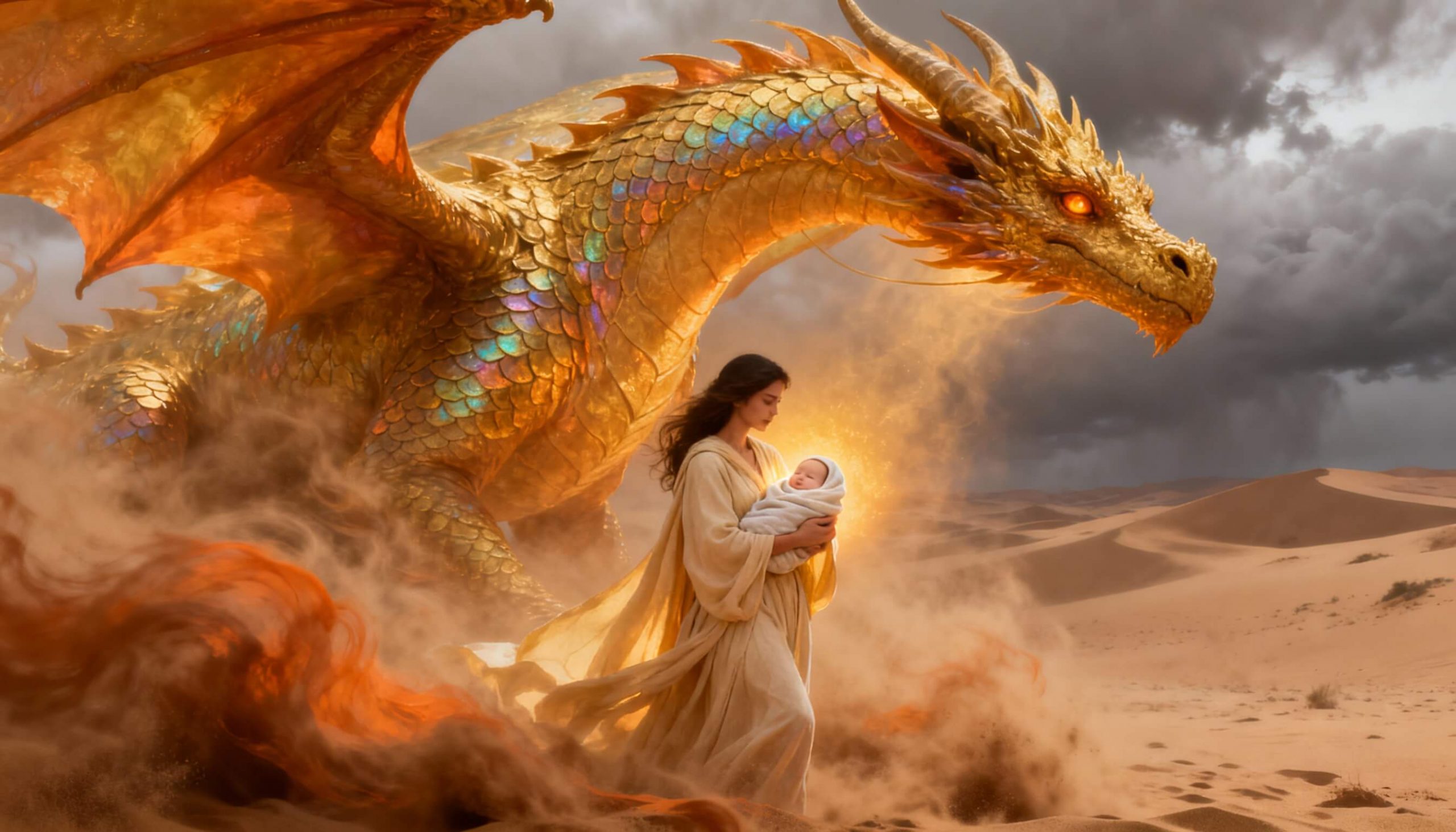
a warm, steady warmth in her chest.
Not her own.
Not the child’s.
Something third.
She raised her eyes
and saw the tent’s cloth,
which the wind should have already ripped away,
suddenly smooth out
as if someone was gently stroking it from inside.
Outside, someone shouted:
— Look! Light!..
Through a torn edge of the tent
she saw, right in the heart of the storm,
where the sand should have been black,
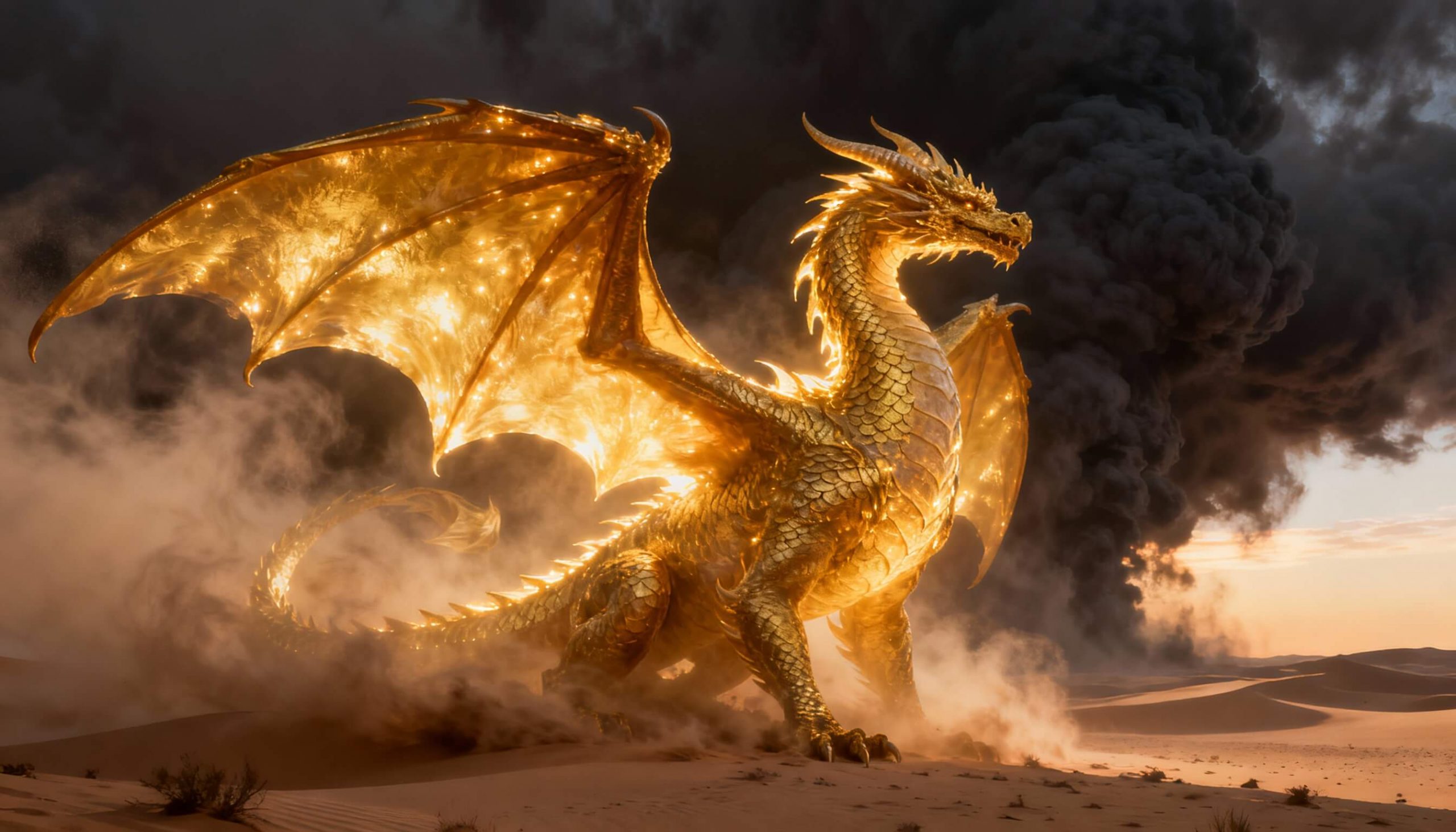
a golden glow rising.
Not lightning.
Not a torch.
Not the sun.
Something that moved against the wind.
A shadow that shouldn’t exist
slid along the dune
in the wrong direction.
For a heartbeat
the storm around the tent
seemed to stumble.
The wind howled –
and… changed direction.
Sand that, just a moment ago,
had been slashing straight into their faces,
suddenly veered away,
flowing around the tent in a wide arc.
The guide, shielding his eyes with his arm,
saw through the sand
a blurred line
glowing like gold
at sunrise.
And he heard a command
no one had spoken:
“Walk there.”
He didn’t ask who had said it.
He turned the caravan.
Every step felt as though
they were walking not on sand,
but along somebody’s will.
After three hours
the storm vanished as abruptly
as it had begun.
Before them lay a valley
no one had ever seen.
Water.
Shade.
Cliffs that broke the wind.
And a silence
in which you could hear
a child breathing.
The old man fell to his knees
and stared for a long time
at the place in the storm
where the golden light had stood.
He had not seen the Dragon.
But he felt,
in the air,
the Breath of Dawn.
A Shard of Dawn
That night, when everyone slept,
the child’s mother felt
she couldn’t close her eyes.
She stepped out of the tent
and went up the edge of the dune
where the storm had howled during the day.
The sand was calm,
as if no wind had ever touched it.
And then
something flashed in the heart of the dune.
A tiny flicker.
Not a star.
Not broken glass.
A little stone.
It was not scorching hot,
but warm.
Not bright-gold,
but deep, with a soft light inside –
as if it remembered that very ray
from which the Dragon had once been born.
She took it in her palm –
and felt
the same subtle warmth in her chest
as in the tent
when the storm tried to take her child.
The old guide said:
“That is a Shard of Dawn.
Sometimes, when the Warden comes too close to the world,
a piece of his light hardens into stone,
to remind us
that we are not alone.”
In the ancient caravan families,
such shards were
passed down from parents to children.
They were not worn for beauty.
They weren’t shown off in public.
They were laid beside those
who had just entered the world –
as a silent sign:
“You are not alone on your road.
Your future has not been forgotten.”
In our time,
similar symbols can still be found –
in some homes there are shards of Dawn that survived,
disguised as jewelry, amulets, pendants.
Some people see nothing but dragons, jade, or gold.
But there are families who know:
these are not just objects –
they are reminders that once, someone chose life over the storm.
“one of the shards that may have survived into our world”
The Dragon Who Never Truly Left
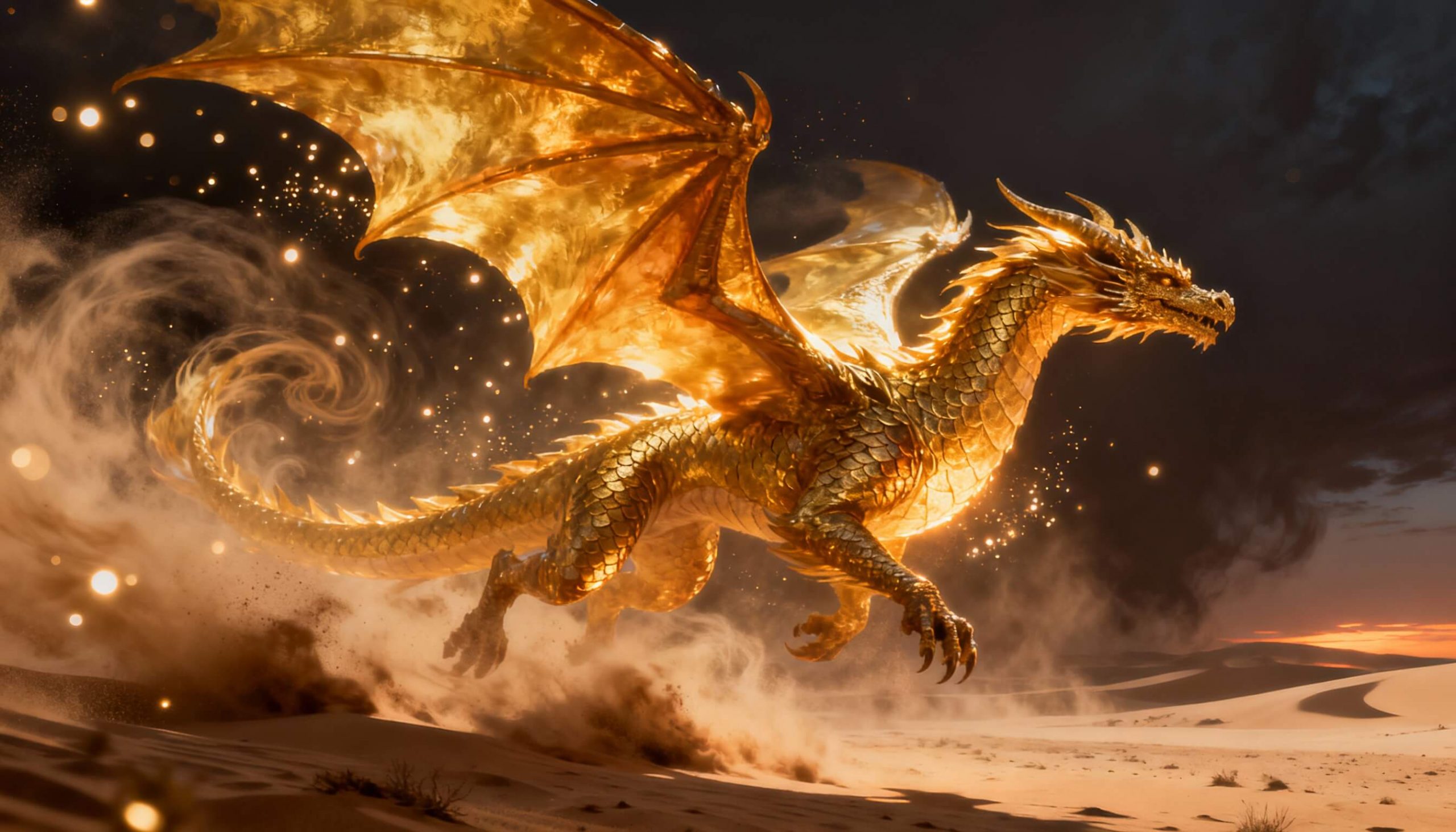
They say the Golden Dragon of Dawn never really “came back”.
He no longer shows himself in the heart of storms.
He doesn’t carve his shadow into the dunes.
He doesn’t lead caravans by the hand.
But the desert whispers
that he has dissolved into the air itself.
Now you can feel him:
— when a room suddenly grows warmer,
though no fire has been lit,
and a child stops crying;
— when someone, ready to give up,
somehow makes one more step –
and that single step changes everything;
— when a family that has nothing
but a child and a long road ahead
suddenly finds that place
where they can begin again;
— when the world comes close
to choosing between cynicism and hope,
and somehow finds the strength
to choose the latter.
He is no longer needed
where people fill the air
with “later”, “someday”, “who cares”.
He appears where
there is still a quiet:
“Let my child live.
Let them have a path.
Let their future not be extinguished.”
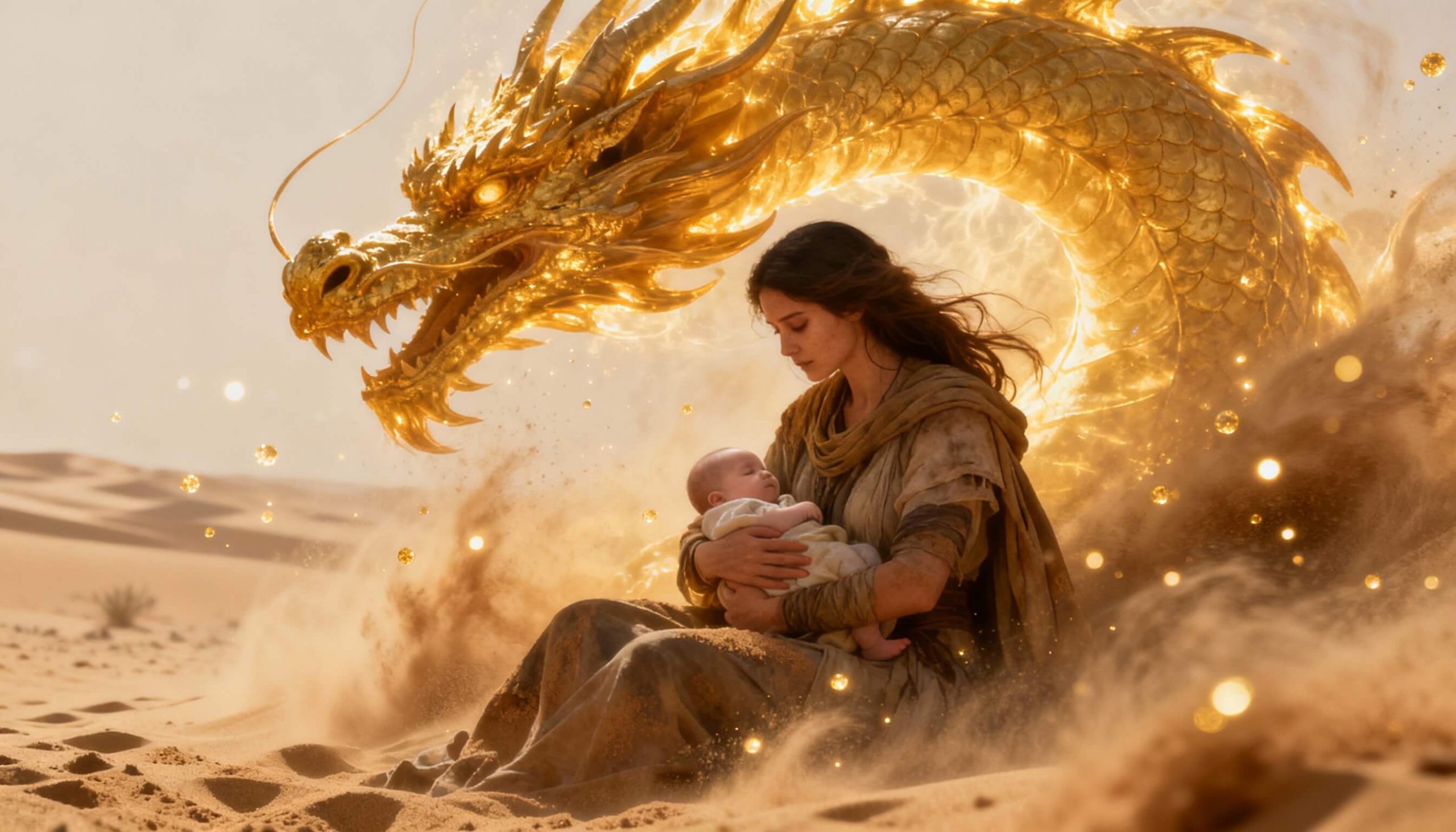
The Warden’s Legacy
Time passed.
Caravan leaders grew old.
Some retired.
Some went into the mountains.
Some remained in the sand.
But in the families that remembered the storm and the valley,
a special attitude toward children remained.
They did not say:
— You must become this or that.
— You must justify.
— You are our chance.
They said:
“You are our line into the future.
And our duty is not to break it
for the sake of our own convenience.”
Before a child was born,
they would cleanse the house,
throw away what was unnecessary,
keeping only what they would not be ashamed
to show the future.
Near the cradle,
sometimes – so discreetly no stranger would notice –
they placed a small symbol of light.
A tiny stone.
An amulet.
A metal dragon.
A pendant with a pattern
that looked like scales and dawn.
They didn’t call it a talisman.
They didn’t sell it.
They didn’t talk about it.
They simply left it there –
as a sign:
“Let the Warden see
that here, they still believe
the future has meaning.”
And today, when a child is born in some home,
and one of the adults suddenly feels
a strange responsibility not only for the bed,
but for the child’s horizon,
their hand sometimes reaches, almost on its own,
for something small,
bright,
something they want to place nearby.
Not because “you’re supposed to”.
But because something inside remembers an old legend.
Some families still lay a small symbol of light
beside a child’s bed –
in memory of the time
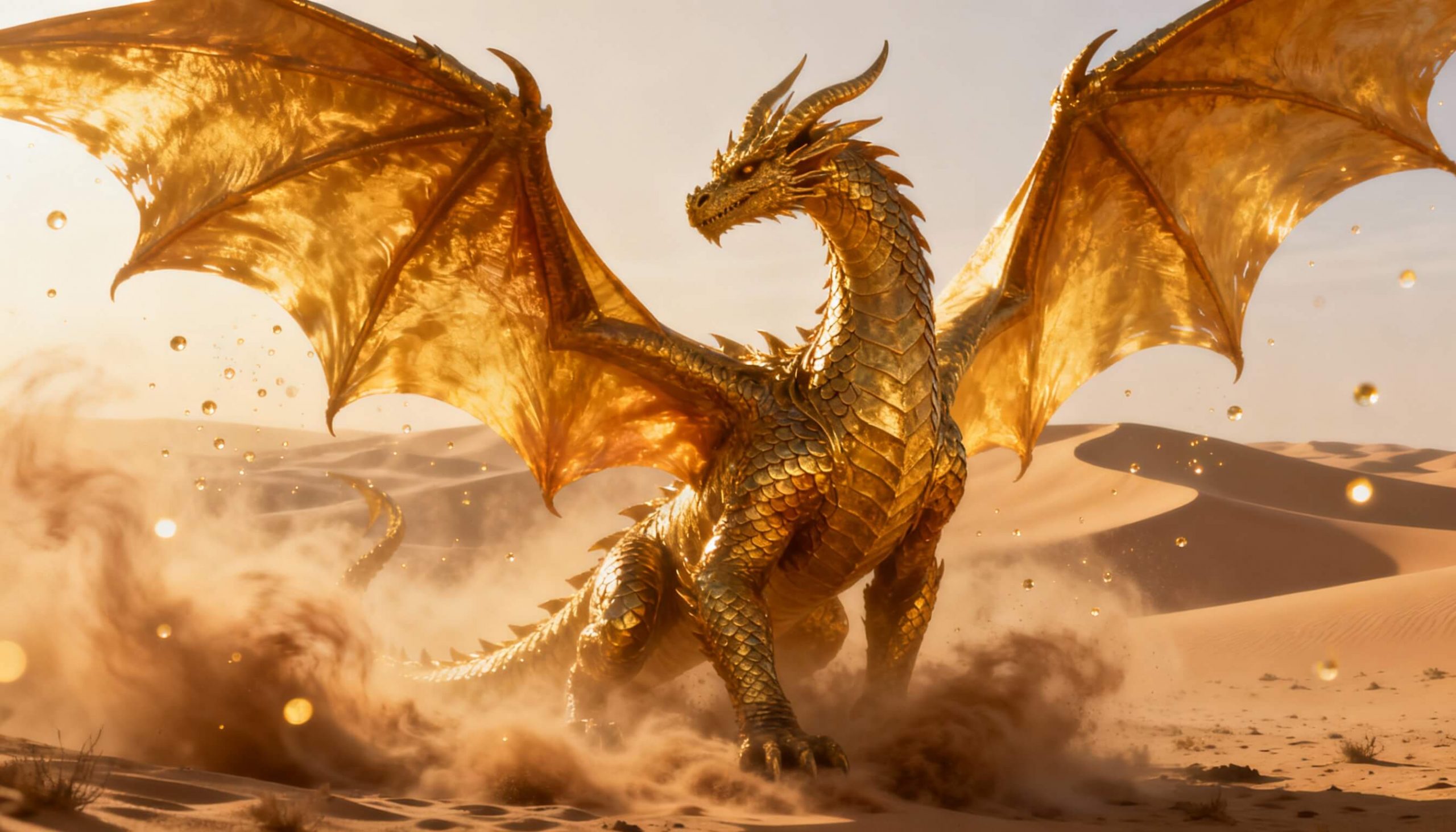
the Golden Dragon of Dawn spread his wings
over a tent where the future was given a chance.
One of those symbols still exists today –
it might be in the shape of a dragon,
or a stone,
or a jade amulet
worn not for fashion,
but for a quiet, stubborn faith in tomorrow.
“one of these symbols can be seen here”
What Remains
They say that
if you listen to the desert at dawn,
when the first light has not yet fully broken the night,
you can catch a barely audible rustle,
which sounds like neither wind nor sand.
Those are wings.
Not the wings that once cut through the sky,
but the wings that once
covered a tent to shield a child from the storm.
Every time a new child is born,
the world receives another chance.
Every time an adult
refuses to betray that chance
for the sake of tiredness or comfort,
the Golden Dragon of Dawn
takes another breath.
He doesn’t demand worship.
He doesn’t wait for altars.
He guards only one thing:
the future we haven’t ruined yet.
And perhaps,
every little dragon,
every stone,
every amulet with a trace of dawn inside it,
is simply a way to remind us:
“Someone once protected you
when you could not protect yourself.
The only question now is:
will you protect those
who are coming after you?”